
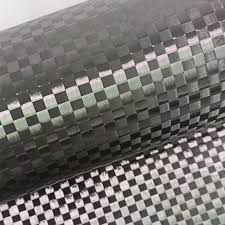

Industrial-strength heavy-tow carbon fiber for structural composites. The 12,000 filament tow deposits more material per pass, reducing layup time while delivering exceptional structural performance for panels, chassis parts, and load-bearing components.
3K carbon fiber has 3,000 filaments per tow, producing a finer, tighter weave suited to cosmetic and lightweight applications. 12K carbon fiber has 12,000 filaments per tow, creating a heavier weave that deposits more material per layer. This makes 12K faster to lay up and better suited for structural components where thickness and rigidity per ply matter more than surface aesthetics.
Both use the same base carbon fiber chemistry, so the filament strength is equivalent. The key difference is material deposition: 12K builds structural thickness faster, which makes a finished 12K laminate feel stiffer and heavier for the same number of layers. For a given target thickness, 12K reaches it with fewer plies and less layup time.
12K carbon fiber is compatible with epoxy, vinyl ester, and polyester resin systems. Epoxy resins are recommended for structural and aerospace-grade applications due to superior adhesion and mechanical properties. The fabric wets out readily under hand layup, vacuum bagging, and resin infusion (VARTM) processes.
12K carbon fiber is best suited for structural composites where build efficiency and mechanical performance take priority over a fine cosmetic finish. Typical applications include automotive chassis and body panels, marine hull reinforcement, industrial load-bearing structures, mold tooling, and any part where reducing layup time without compromising stiffness is a requirement.
12K carbon fiber works well with both wet layup and resin infusion processes. The heavier tow wets out thoroughly with hand-applied epoxy when proper saturation technique is used, making it accessible for shop fabricators without vacuum infusion equipment. For higher-volume or performance-critical parts, vacuum bagging and VARTM infusion improve fiber-to-resin ratios and reduce voids — both are fully compatible with 12K fabric.